Nutrient Agar
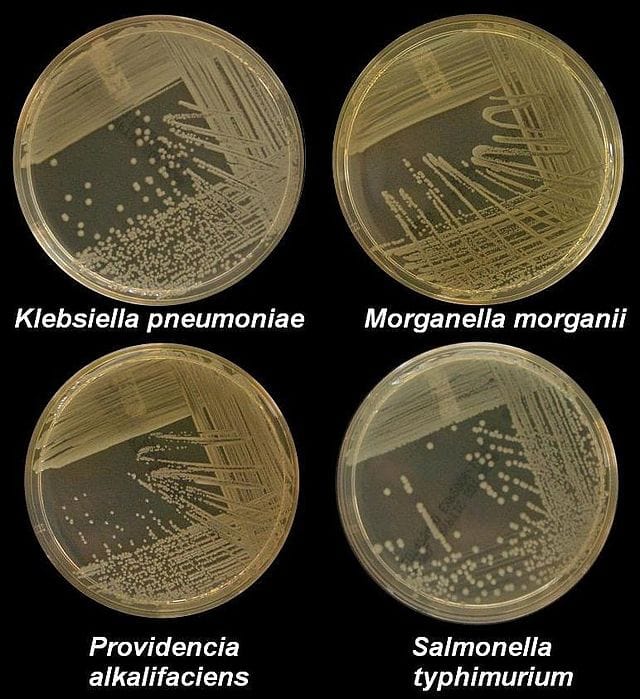
A. Definition & Function
- Nutrient Agar (NA) is a solid growth medium used to grow various types of non-fastidious bacteria (do not require complex nutrients) under laboratory conditions
- Included in the general-purpose media category
- Does not contain selective or differential components, so it supports the growth of many bacteria
B. Main Function
- Primary Culture of Clinical Specimens
- Urine specimens (detection of urinary tract infections)
- Blood (after being modified as a supporting medium)
- Wounds/exudates (identification of bacteria that cause infection)
- Sputum (initial screening of respiratory tract infections)
- Allows visualization of bacterial colony growth before being transferred to specific media
- Isolate Purity Test
- Biochemical identification (catalase, coagulase tests, etc.)
- Gram Staining
- Antibiotic sensitivity test
- Supporting Media for Antibiotic Sensitivity Tests
- Basic media for certain bacterial resistance tests
- Control media in the validation of the AST (Antimicrobial Susceptibility Testing) method
- Detection of Contamination in Equipment/Specimens
- Checking the sterility of medical equipment (eg: catheters, needles) by wiping the surface and inoculating into NA
- Monitoring air contamination in the laboratory room (settled plate method)
- Temporary Storage of Bacterial Cultures
- Transferring to enriched media (eg: Blood Agar)
- Sending to a reference laboratory
- Application in Rapid Diagnostics
- Bacterial colonies from NA can be taken for:
- Gram staining (Gram-positive/negative classification)
- Rapid tests such as catalase/coagulase
- Composition of nutrient agar
Used as the first medium to grow bacteria from:
Ensures that bacterial cultures are not contaminated before:
Although not the main medium for Kirby-Bauer, NA can be used as:
Laboratory Quality Control (QC):
Storing bacterial isolates in the short term (2–8°C) before:
Advanced Microscopic Examination: